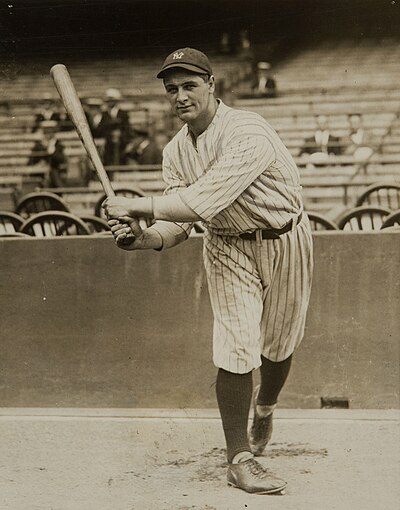
Henry Louis "Lou" Gehrig was the New York Yankees' first baseman and one of the greatest baseball players of all time. Known as "The Iron Horse" for his consecutive games streak (2,130 games played without missing a game from 1925 to 1939), Gehrig began experiencing weakness and coordination problems in 1938.
On June 19, 1939, he was diagnosed with amyotrophic lateral sclerosis at the Mayo Clinic. Gehrig was 35 years old.
Two weeks later, on July 4, 1939 — "Lou Gehrig Appreciation Day" at Yankee Stadium — he delivered one of the most famous speeches in sports history. Standing before 62,000 fans, he said: "Today, I consider myself the luckiest man on the face of the earth."
The speech, delivered by a man who had just received a terminal diagnosis, stands as one of history's most remarkable demonstrations of grace and perspective. Gehrig died on June 2, 1941, at age 37.
In his honor, ALS is widely known as "Lou Gehrig's Disease" in the United States. His legacy extends beyond baseball — he gave ALS a human face and set a tone of dignity and courage in facing the disease that continues to inspire patients and caregivers to this day.